Industries
ISO Certification for Oil and Gas Industry
Trusted by 120+ Oil & Gas Companies | ISO Consultants Since 2014 | Serving UAE, Qatar, KSA, Russia & Beyond
Home » Oil and Gas Industries
Contact Us For Expert Assistance
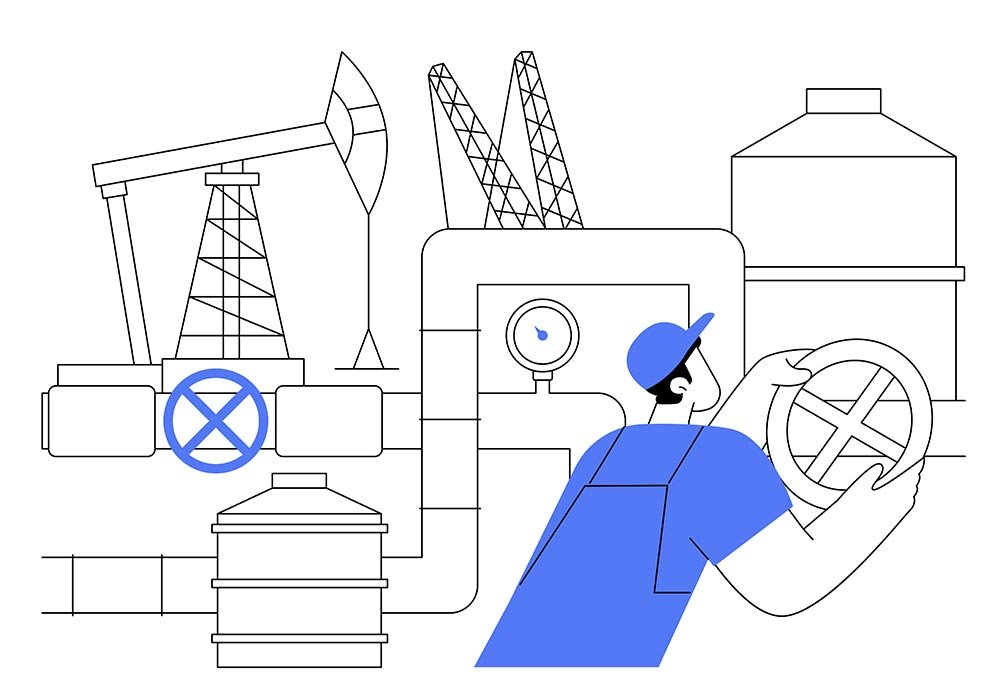
ISO certification for the oil and gas industry covers quality, safety, and environmental management standards. Drilling contractors, EPC firms, and upstream, midstream, and downstream operators must hold these certifications.
The most common standards are ISO 9001 (quality management), ISO 14001 (environmental management), and ISO 45001 (occupational health and safety). These standards address core HSE requirements for contractor qualification, offshore project approvals, and regulatory compliance in major producing countries.
Companies involved in upstream oil and gas operations must ensure ISO compliance to meet stringent safety and environmental mandates. Midstream and downstream sectors also rely on specific ISO standards like ISO 50001 for energy management in refineries and processing facilities, optimizing efficiency and sustainability.
Companies involved in offshore operations must hold ISO 45001 and ISO 14001 certification. These are often mandatory contract conditions. Onshore operators face similar rules when bidding for government contracts or working with international oil companies (IOCs) that require supply chain certification.
This guide explains which ISO standards apply to oil and gas companies. It covers certification requirements and how to get certified efficiently. The content suits upstream, midstream, and downstream operations.
Offshore vs Onshore Compliance Requirements
Offshore and onshore oil and gas operations have distinct compliance demands driven by differing operational risks and regulatory frameworks. Offshore projects face harsher environments, including exposure to severe weather, remote locations, and increased safety hazards. Consequently, ISO 45001 occupational health and safety oil and gas requirements are mandatory offshore to ensure rigorous risk control, continuous monitoring, and emergency preparedness.
ISO 14001 environmental management oil and gas standards are equally critical offshore for spill prevention, waste management, and minimizing environmental footprint in sensitive marine ecosystems.
Onshore operations, while generally less hazardous, still require strict adherence to HSE certification for oil and gas companies, especially when engaging in pipeline operations, refining, or petrochemical processing. Contractor qualification and vendor approval processes in GCC countries and other regions often mandate ISO 45001 and ISO 14001 certification for both offshore and onshore contractors to ensure consistent safety performance and environmental compliance.
These certifications form the baseline for regulatory approvals and are frequently prerequisites for bidding on government or IOC contracts.
| Requirement | Offshore | Onshore |
|---|---|---|
| Mandatory standards | ISO 45001, ISO 14001 | ISO 45001, ISO 14001 (contract dependent) |
| Key risks | Equipment failure, weather, remote location, spills | Pipeline leaks, refinery hazards, petrochemical exposure |
| Audit type | Remote + on-site, annual surveillance | On-site, annual surveillance |
| Regulator examples | NORSOK, IMO, ADNOC offshore HSE | ADNOC, Saudi Aramco SRQS, QatarEnergy CHSEMS |
Applicable ISO Standards for Oil and Gas Industry
ISO 9001 for Oil and Gas Industry
ISO 9001 is the global standard for quality management systems. Oil and gas companies use it to manage complex supply chains and diverse operations. This standard ensures consistent product quality and process control across procurement, engineering, production, and field services.
It addresses challenges like raw material variability and equipment failure risks. ISO 9001 standardizes workflows and embeds corrective actions. This reduces rework and downtime.
The standard supports customer satisfaction by aligning product quality with regulatory requirements and contracts. It promotes continual improvement and internal audits. This fosters operational excellence and risk management, vital for reliable operations in a high-stakes environment.
Benefits include enhanced consistency and supplier reliability in the oil and gas supply chain, strengthening service quality and contractor performance.
ISO 14001 for Oil and Gas Industry
ISO 14001 sets environmental management standards for the oil and gas sector. It helps companies identify, monitor, and control impacts like emissions, spills, and waste disposal. This ensures compliance with strict regulatory requirements.
The standard drives sustainable practices and reduces waste. It improves environmental integrity, which is critical under industry scrutiny. ISO 14001 helps companies show environmental responsibility to regulators and stakeholders.
Combining ISO 14001 with risk assessments improves disaster management. It reduces environmental harm from offshore and onshore activities.
ISO 45001 for Oil and Gas Industry
ISO 45001 is the global standard for occupational health and safety management. It helps companies manage workplace safety in hazardous oil and gas environments. The standard guides hazard identification, risk assessments, and safety requirements across operations, including offshore platforms.
It requires proactive risk management, employee training, and emergency preparedness. This meets HSE certification needs for oil and gas companies and offshore drilling operations.
Using ISO 45001 with ISO 14001 lets companies manage health and environmental risks together. This ensures regulatory compliance and raises safety standards.
Effective implementation of ISO 45001 helps reduce operational risks by establishing safety management systems that continuously monitor hazards, enforce safety controls, and promote a safety culture. It supports contractor qualification by ensuring all vendors comply with stringent safety protocols, which is essential in high-risk offshore environments.
ISO 50001 for Oil and Gas Industry
ISO 50001 focuses on energy management in refineries and oil and gas facilities. It helps optimize energy use and improve efficiency. Energy-intensive refining and processing operations benefit from this standard.
ISO 50001 is key for midstream and downstream operators. Energy efficiency is critical for competitiveness and sustainability in these sectors.
ISO 29001 Certification for Petroleum Companies
ISO 29001 is a petroleum industry quality management standard. It builds on ISO 9001 with extra controls for the oil and gas supply chain. The focus is on defect prevention, reliability, and traceability.
Companies get ISO 29001 certification by aligning processes with sector-specific rules. Certification audits by accredited bodies follow. This standard suits suppliers, manufacturers, and EPC contractors in the energy industry.
ISO 27001 Certification for Oil and Gas Industry
ISO 27001 certification for oil and gas industry gives you a clear way to protect your OT and IT systems. The Information Security Management System (ISMS) covers SCADA, DCS, servers, networks, and digital oilfield tools. You use it to keep drilling, pipeline checks, and refinery control systems secure.
A cyber attack can shut down work and raise safety risk fast. That is why many buyers ask suppliers to meet ISO 27001 standards for oil and gas industry. Strong SCADA information security and smart cybersecurity management oil gas steps help you cut downtime, meet client needs, and earn trust.
ISO 27701 Certification for Oil and Gas Industry
ISO 27701 certification for oil and gas industry adds the Privacy Information Management System (PIMS) to your ISMS. It covers contractor personnel data, HSE records, and worker health data. You use it to control access, storage, use, and consent.
This standard helps when you manage large sets of contractor personnel data. It also helps when EU partners expect ISO 27701 standards for oil and gas industry. When you add privacy information management oil gas controls to ISO 27001, you lower data risk and build trust.
ISO 37001 Certification for Oil and Gas Industry
ISO 37001 certification for oil and gas industry gives you a clear way to control bribery risk in your business. The Anti-Bribery Management System (ABMS) covers tenders, buying, agent ties, and contract awards. You use it to set checks on gifts, due diligence, approvals, and reports.
This standard helps when anti-bribery oil gas procurement risk runs high. It also helps when you chase ABMS government oil contracts in tough markets. When you meet ISO 37001 standards for oil and gas industry, you show control, cut risk, and back clean bids.
ISO 41001 Certification for Oil and Gas Industry
ISO 41001 certification for oil and gas industry helps you manage sites and support services with more control. The Facility Management System (FM) covers upkeep plans, utilities, camp work, vendor checks, and space use. You use it to keep site support safe, smooth, and easy to track.
You need this standard when you run facility management refinery work or an FM system offshore camp. It helps your team match daily support work with site HSE and quality goals. When you meet ISO 41001 standards for oil and gas industry, you reduce service gaps, improve uptime, and support client needs in UAE, Qatar, and KSA.
ISO 22000 Certification for Oil and Gas Industry
ISO 22000 certification for oil and gas industry helps you control food safety across your catering sites. The Food Safety Management System covers food safety offshore catering, storage, prep, cooking, transport, and cleaning. You use it to protect crews in remote camps and offshore units.
This standard also helps you run oil camp kitchen management with clear HACCP checks and simple trace steps. If one food illness case starts, crew health can drop and site work can slow. Many clients now ask subcontractors to meet ISO 22000 standards for oil and gas industry. Certification helps you lower food risk, win new work, and show your team runs a safe food system.
ISO 21001 Certification for Oil and Gas Industry
ISO 21001 certification for oil and gas industry helps you run your training work in a clear and steady way. The Educational Organization Management System (EOMS) covers course plans, trainer skills, learner feedback, records, and test checks. You can use it for HSE induction, NEBOSH, BOSIET, OPITO, and other oil and gas training courses.
Many operators look for training firms with ISO 21001 certification. It shows your team can deliver strong HSE training with clear controls. This helps you gain approvals and meet client needs in the UAE, KSA, and Qatar.
Your oil and gas business needs the ISO standards that fit your real risks and goals. Global ISO Certificates helps you find the right fit for your upstream, midstream, or downstream work.
If you work in UAE, Qatar, KSA, or Russia, we can help. Our team gives you clear advice on the ISO standards that fit your oil and gas work. You can request a free consultation to plan your next certification step.
ISO Certification for Offshore Oil and Gas Projects
Offshore projects face tough environments and strict HSE requirements. Operators and contractors must manage risks like equipment failure, natural disasters, and hazardous conditions.
ISO 45001 and ISO 14001 form a strong framework offshore. ISO 45001 ensures workplace safety via monitoring, risk assessments, and corrective actions. ISO 14001 manages environmental impacts like spill prevention and waste control.
Companies must hold these certifications to win offshore contracts. They also support business continuity, which is vital offshore.
Contractor qualification and vendor approval in GCC offshore projects heavily depend on documented ISO-certified systems. These certifications prove compliance with international regulatory compliance for oil and gas and demonstrate adherence to global best practices.
The Middle East region hosts many organizations specializing in ISO consulting for the oil and gas industry. Engaging with the best ISO consultants in the Middle East can streamline obtaining ISO certification, ensuring compliance with regional and international standards efficiently.
Audit Challenges and Compliance Risks in Oil and Gas Certification
Achieving ISO certification for oil and gas industry operators involves overcoming several challenges. The sector’s complexity and high operational risks mean aligning existing processes with ISO requirements can be resource-intensive. Common issues include incomplete documentation, inconsistent implementation of safety management systems, and gaps in environmental controls.
Certification audits frequently uncover nonconformities related to insufficient risk control measures, inadequate training records, and poor continuous monitoring of operational risks. Offshore operations especially encounter challenges in meeting ISO 45001 occupational health and safety oil and gas obligations due to the dynamic and hazardous work environment.
These challenges underscore the importance of thorough gap assessments, internal audits, and management reviews before external certification audits. Maintaining compliance requires ongoing surveillance audits to identify and rectify emerging nonconformities promptly.
Mandatory vs Recommended ISO Standards for Oil & Gas Contractors
| Standard | Scope | Mandatory/Recommended | Who Needs It |
|---|---|---|---|
| ISO 9001 | Quality management across operations | Recommended | All oil and gas companies, contractors |
| ISO 14001 | Environmental management, emissions, waste | Mandatory in many regions | Offshore and onshore operators, contractors |
| ISO 45001 | Occupational health and safety management | Mandatory for offshore projects | Offshore contractors, rig operators, refineries |
| ISO 29001 | Sector-specific quality management for petroleum | Recommended | Suppliers, manufacturers, EPC contractors |
| ISO 50001 | Energy management and efficiency | Recommended | Operators with high energy consumption |
| ISO 22301 | Business continuity management | Recommended | Critical operations, offshore projects |
| ISO 27001 | Information security management | Recommended | Companies with digitalized operations |
Integrated Management System (IMS) for Oil and Gas
Many oil and gas companies use an Integrated Management System (IMS). IMS combines ISO 9001, ISO 14001, and ISO 45001 into one framework.
This simplifies certification and cuts duplication. It also improves compliance with international rules.
IMS boosts operational efficiency. It helps manage certified systems across upstream, midstream, and downstream.
ISO Certification Services in UAE, Russia, Qatar, and KSA
ISO Certification for Oil and Gas Companies in UAE
ISO certification for oil and gas companies in UAE helps ADNOC vendor qualification. Our ISO certification services UAE oil gas team guides your approval.
ISO certification for oil and gas companies in UAE helps you meet TAQA needs. ADNOC Drilling also checks your systems before vendor approval.
ISO Certification for Oil and Gas Companies in KSA
ISO certification for oil and gas companies in Saudi Arabia helps contractor approval. IKTVA ISO certification and ISO certification KSA oil gas boost buyer trust.
ISO certification for oil and gas companies in Saudi Arabia helps you meet SABIC needs. It also helps your team meet SATORP vendor checks.
ISO Certification for Oil and Gas Companies in Qatar
ISO certification for oil and gas companies in Qatar helps QatarEnergy contractor ISO approval. Qatargas HSE requirements help your team stay ready for site audits.
ISO certification for oil and gas companies in Qatar helps North Field work. Qatargas HSE requirements help your team pass site checks fast.
ISO Certification for Oil and Gas Companies in Russia
ISO certification for oil and gas companies in Russia helps meet Rosneft supplier requirements. ISO certification Russia oil gas helps your team gain faster vendor approval.
ISO certification for oil and gas companies in Russia helps Arctic project safety. It also helps you meet Rosneft supplier requirements fast.
Global ISO Certificates supports oil and gas companies across UAE, KSA, Qatar, and Russia. Our team knows local operator requirements and qualification frameworks in each country. Contact us for a free assessment and find out which ISO standards your business needs.
Benefits of ISO Certification for the Oil and Gas Sector
- Enhanced Safety Across High-Risk Operations
- Environmental Responsibility and Compliance
- Improved Operational Efficiency and Energy Use
- Stronger Supply Chain Control and Quality Assurance
- Easier Access to International Contracts and Markets
- Data Protection for Digitalized Operations
- Strengthened Corporate Reputation and Stakeholder Trust
ISO Certification Process for Oil and Gas Companies
Getting ISO certification in oil and gas requires a tailored process. It fits the sector’s complexity and risks.
Operations onshore or offshore, in refineries or gas networks, must align with global standards. They also meet local rules.

Gap Assessment and Initial System Review
We assess current policies and practices. This includes safety, environmental controls, energy use, procurement, and contractor management.
Documentation and System Implementation
We update documents like HSE manuals and audit checklists. Systems follow ISO 9001, 14001, or 45001, adapted to your needs.
Internal Training and Workforce Engagement
We train your team on new procedures and responsibilities. This ensures smooth system use.
Internal Audit & Management Review
Internal audits verify system effectiveness. Management reviews fix gaps and prepare for certification.
Certification Audit by Accredited Body
The audit has two stages: document review and on-site check. Passing both awards certification.
Surveillance Audits and Ongoing Improvement
Annual audits keep certification valid. We support ongoing system improvements.
Frequently Asked Questions – ISO Certification for Oil and Gas
What ISO certifications are most relevant for oil and gas companies?
Companies must hold ISO 14001 for environment, ISO 45001 for safety, and ISO 9001 for quality. ISO 29001 is recommended for petroleum-specific quality.
Is ISO 45001 mandatory for offshore oil and gas projects?
Yes. Companies must hold ISO 45001 offshore to manage workplace hazards and ensure safety.
How does ISO 14001 apply to the oil and gas industry?
ISO 14001 helps manage emissions, spills, and waste. It ensures companies meet environmental laws.
What HSE certifications does an oil and gas contractor need?
Contractors must hold ISO 45001 for safety and ISO 14001 for environment. ISO 9001 may also be required.
Can ISO 9001 and ISO 14001 be certified together for oil and gas?
Yes. Integrated certification simplifies audits and ensures consistent quality and environmental compliance.
What is the difference between ISO 9001 and ISO 29001 for oil companies?
ISO 9001 covers general quality management. ISO 29001 adds petroleum-specific quality and reliability rules.
How much does ISO certification cost for oil and gas companies in UAE?
Costs vary by company size and scope. Consult providers for tailored quotes.
How to get ISO 29001 certification for petroleum companies?
Companies must do gap analysis, use quality processes, train staff, and pass accredited audits.
What are the international regulatory compliance requirements for oil and gas?
Companies must meet ISO 14001, 45001, 9001, plus local laws and industry codes. ISO helps ensure compliance.