What Is the ISO 14001 Internal Audit Process?
The ISO 14001 Internal Audit Process checks your environmental systems. It finds gaps in your daily business operations. You must fix these gaps before external checks. This process ensures your team follows the rules. Auditors look at your daily waste management tasks. They verify if you meet local legal standards.
Companies in UAE and Saudi need this vital step. It keeps your ISO 14001 certification valid and active. You learn where your business can improve quickly. This proactive step saves your company much money. Internal audits protect your brand reputation every day.
Why Conduct an ISO 14001 Internal Audit?
An ISO 14001 internal audit prevents legal trouble. It shows you care about the local environment. You find risks before they cause major harm.
Audits keep your staff aware of their duties. Management gets clear data on system performance. You can fix errors without external penalties. It prepares your team for the final audit. Regular checks build trust with your local clients.
You save resources by spotting waste early. Your team learns how to follow procedures better.
Explore Global ISO Certificates for expert guidance today.
Who Can Perform the Audit?
You need a trained and independent staff member. The auditor must not check their own work. This rule keeps the audit fair and honest. You can also hire an outside audit expert. External consultants bring fresh eyes to your system.
They know the strict UAE and Saudi laws. Auditors must understand environmental risks very well. They need strong communication skills for staff interviews.
Good auditors ask clear and direct questions. They take detailed notes during the site visit.
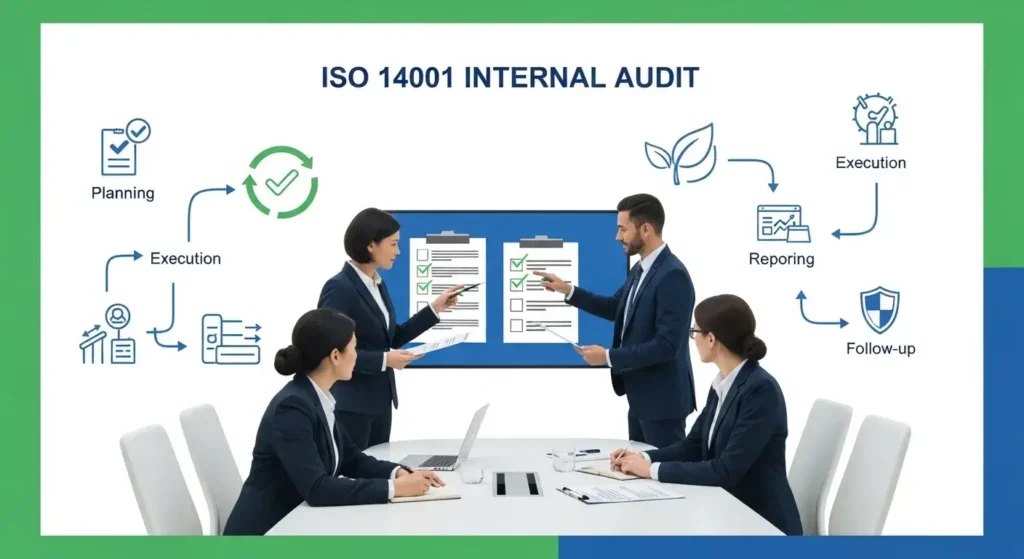
How to Conduct ISO 14001 Internal Audit?
Knowing how to conduct ISO 14001 internal audit takes planning. You must follow a strict timeline every year. Start by reviewing your past audit results. Identify areas that had problems last year. Notify your team about the upcoming audit dates.
Create a schedule for each department visit. Ensure managers are present during the audit. Gather all your current environmental policy documents. Set clear goals for this specific audit cycle.
Step 1: How to Plan the Audit Program?
You must schedule audits for the whole year. Focus on high-risk areas more often. Low-risk areas need fewer checks per year. Assign specific dates for each department review.
Choose the right auditor for each specific task. Make sure managers agree to the audit schedule. Share the final plan with your entire team. Keep the plan flexible for sudden business changes.
A good plan makes the audit run smoothly. Update your plan when you change business processes.
Step 2: How to Define Audit Scope?
The scope defines what the audit will cover. You must choose specific locations to review. Select the exact processes the auditor will check.
Do not audit everything at the same time. Focus on operations with high environmental impact. Define the start and end dates clearly. Tell departments what documents you will need.
Clear scopes prevent wasted time and effort. Your team knows exactly what to prepare.
Read about what are ISO 14001 requirements for better scopes.
Step 3: What Is the ISO 14001 Audit Procedure?
The ISO 14001 audit procedure outlines the rules. It tells auditors exactly how to behave. This document sets the standard for all checks. You must follow this procedure every single time. It ensures every audit remains consistent and fair.
The procedure details how to report the findings. It lists the steps for fixing discovered issues.
Train your auditors on this exact procedure. An ISO 14001 audit procedure for companies is mandatory. Keep this document updated with new 2026 rules.
Step 4: How to Prepare an Internal Audit ISO 14001 Checklist?
An internal audit ISO 14001 checklist is vital. It guides the auditor through the facility. Write down specific questions for each department. Checklists ensure you never miss an important step.
Include questions about waste disposal and energy use. Add points about emergency spill response plans. Review our ISO 14001 audit checklist guide for details.
Tailor the checklist to your specific industry. Give the checklist to the auditor before starting. Update questions based on past audit issues.
Step 5: How to Review Documents?
You must check all paperwork before site visits. Review the main environmental policy manual first. Check past training records for all employees. Read the incident reports from the last year.
Ensure all permits are valid for 2026. Verify that management reviews happened on time. Missing documents mean an instant audit failure. Check our ISO 14001 documentation requirements page for help.
Make notes of missing files for the report. Good documents prove your system actually works.
Step 6: How to Execute the Audit On-Site?
The auditor visits the physical work area. They observe employees doing their daily tasks. They check if reality matches the written procedures.
Auditors look for chemical spills or unsafe waste. They inspect storage areas for dangerous materials. They check if safety equipment is clearly visible.
The auditor takes photos of any obvious problems. They compare their findings with the checklist. They record both good practices and bad mistakes. On-site checks reveal the truth about compliance.
Step 7: How to Gather Audit Evidence?
Auditors need solid proof for every finding. They cannot rely on guesses or simple opinions. Evidence includes photos, copies, and physical records. Auditors must write down specific document numbers. They note the exact time and date of observations.
Clear evidence prevents arguments with department managers. You need facts to write a good report. Auditors must organize their notes very carefully. Good evidence makes fixing problems much easier. Keep all evidence secure after the audit ends.
Step 8: How to Interview Your Staff?
Auditors must talk to workers on the floor. They ask how workers handle chemical spills. They check if staff know the environmental policy. Auditors must ask simple, open-ended questions.
They should never scare or threaten the staff. The goal is to test actual worker knowledge. Auditors write down the answers they receive. If staff lack knowledge, training needs improvement. Friendly interviews yield the most honest answers. Listen closely to worker concerns during the chat.
Step 9: What Are Internal Audit Requirements ISO 14001?
You must follow specific standard rules. These internal audit requirements ISO 14001 are strict. You must prove you checked legal compliance. You must show evidence of corrective actions taken. Auditors must be truly objective and impartial. Management must review the final audit results.
You must keep audit records for several years. You must audit all shifts, including night workers. Following requirements keeps your certificate safe. Learn how to maintain ISO 14001 certification with ease.
Step 10: How to Draft the Findings?
Auditors must sort their notes after the visit. They separate major issues from minor problems. A major issue means you broke a law. A minor issue is a small process error. Auditors must link each issue to a rule. They must write findings clearly and simply.
Vague findings confuse the management team. State the exact location of the found problem. Provide the specific evidence for each issue. Clear findings lead to fast and easy fixes.
Step 11: How to Write an ISO 14001 Audit Report?
The ISO 14001 audit report summarizes the visit. It includes the scope, dates, and auditor names. It lists all the positive things you do. It clearly states every non-conformity found.
Management reads this report to make decisions. Write the report in simple, clear language. Deliver the report quickly after the audit ends. Keep the tone professional and very objective.
The report guides your next improvement steps. File the signed report safely for external auditors.
What Is an ISO 14001 Audit Report Example?
An ISO 14001 audit report example helps beginners. It shows the correct format and layout. The summary section sits at the very top. The detailed findings follow in a clear table. Each row lists a problem and the evidence. The end features a spot for manager signatures.
Using a template saves you much writing time. It ensures you never miss a required section. Standard formats make comparing yearly reports easy. Ask your consultant for a blank report template.
How to Follow Up on Audit Findings?
The ISO 14001 audit process steps do not end. You must fix every problem the auditor found. Assign a specific person to fix each issue. Give them a strict deadline for the repair.
The auditor must check the fix later. They verify if the problem is truly gone. Close the finding only when proof exists.
Delayed fixes put your certification at risk. Track all open issues on a shared board. Fast action shows management cares about compliance.
What Are Common Audit Mistakes?
Many companies rush the audit planning phase. They assign auditors who check their own work. Some managers argue with the audit findings. Companies often ignore the minor audit issues. They fail to train the internal auditor properly.
Some staff hide problems during the site visit. Companies forget to audit the night shifts. They write vague reports with zero evidence. Avoid these mistakes to save time and money.
Honest audits improve your business every year.
How to Prepare for Certification?
Internal audits ready you for the final test. Fix all internal findings before the certifier arrives. Clean your facility and organize your files. Review the ISO 14001 certification process step-by-step.
Brief your staff on how to answer questions. Ensure top management is present for the opening. Keep your internal audit reports ready to show. A clean internal record proves your dedication.
Confidence comes from thorough internal preparation. Your hard work will earn the final certificate.
How Can Global ISO Certificates Help?
Global ISO Certificates is a trusted name for compliance. Our team supports companies in the UAE and Saudi Arabia with every step of the ISO 14001 internal audit process. We focus on delivering practical, easy-to-use solutions. With Global ISO Certificates, you get complete peace of mind during your ISO 14001 internal audit. Our services help you meet every ISO 14001 audit requirement and keep your certification active.
We guide UAE and Saudi companies to success. Our experts simplify the entire audit process. We provide custom checklists for your specific industry.
We train your staff to become great auditors. Our team reviews your documents for any errors. We conduct practice audits to test your readiness. We help you fix complex environmental issues quickly.
We ensure you pass your external audit easily.
Frequently Asked Questions
How do I start an ISO 14001 internal audit?
Begin by reviewing your last findings. Make an audit plan, gather your team, and prepare your checklist. Follow each step listed in this guide for a successful start.
What are the main ISO 14001 audit process steps?
Key steps are: plan the audit, define the scope, prepare documents, review policies, conduct on-site checks, gather evidence, interview staff, report findings, and follow up on actions.
What is included in an internal audit ISO 14001 checklist?
A checklist includes sections on waste, energy, legal compliance, training, emergency response, and document control. You can see more at our ISO 14001 audit checklist guide.
How do I write an ISO 14001 audit report?
Summarize scope, date, and auditor name. List good practices, report non-conformities, and offer evidence. Use clear language and organize your findings with supporting data.
What are ISO 14001 audit procedure requirements for companies?
The procedure must detail audit rules, evidence collection, reporting steps, and corrective actions. Always keep it updated for UAE and Saudi regulations.
How can I meet internal audit requirements ISO 14001?
You must keep objective records, audit all shifts, cover all processes, prove compliance, report corrective actions, and keep documents safe. Training helps your team meet each requirement.
Who can help with ISO 14001 internal audits in UAE and Saudi Arabia?
Global ISO Certificates provides expert help for companies in the region. We guide you at every step of the ISO 14001 internal audit process. Reach out for tailored checklists, staff training, and full audit support.